
Ultrasonically Stitched Cotton-Linen Blend Textured Fabric
Ultrasonically Stitched Cotton-Linen Blend Textured Fabric
Cotton-linen blend textured fabric has become a sought-after, high-end material for “quiet luxury,” Japanese-inspired casual wear, and “old money” aesthetic professional attire. Woven from a precise blend of combed cotton and natural linen fibers, it transcends the monotony of standard plain-weave cotton-linen fabrics, offering a distinct, three-dimensional, tactile surface that balances visual appeal with practicality. The cotton fibers enhance the fabric’s softness, skin-friendliness, moisture absorption, and breathability—ensuring a dry, comfortable feel against the skin without irritation. Meanwhile, the natural linen fibers provide structural integrity, wrinkle resistance, and a matte, organic texture; the fabric feels crisp and authentic to the touch, with a natural, three-dimensional grain that exudes an understated, sophisticated elegance—a stark contrast to the cheap, synthetic sheen often found in chemical-fiber textiles. This fabric offers exceptional versatility in garment construction: it maintains a relaxed silhouette without appearing limp, features a balanced drape, and boasts a refined, consistent texture. It lends an effortless, laid-back, yet sophisticated air to any look, making it suitable for all four seasons. Prized for its natural texture, breathability, durability, and versatility, this cotton-linen blend is a staple for high-end textured apparel, including shirts, dresses, wide-leg linen trousers, casual chic womenswear, and premium loungewear. However, due to the fabric’s loose weave, the delicate nature of the linen fibers—which are prone to snagging—and the sensitivity of its three-dimensional texture, traditional needle-and-thread sewing often damages the grain and creates surface flaws. This presents a significant challenge in the precision manufacturing of textured fabrics.
Traditional sewing methods frequently result in damaged textures, a loss of quality, and even the total spoilage of finished garments, failing to meet the rigorous production standards required for high-end, textured “quiet luxury” apparel. The core value of cotton-linen blended textured fabrics lies in their natural, three-dimensional relief, uniform and nuanced grain, and a sophisticated, matte, and rustic aesthetic. The appeal of garments made from these fabrics relies entirely on the intricate texture to elevate the overall style. However, the high-speed penetration of conventional sewing needles leaves dense, permanent pinholes across the textured surface. This disrupts the continuity of the fabric’s weave, causing the relief patterns to collapse and the grain to become misaligned or chaotic—effectively destroying the refined, three-dimensional depth. This is particularly problematic for light-colored or solid-toned textured fabrics, where pinholes are stark, impossible to conceal or repair, and necessitate the disposal of the material—significantly increasing production waste and costs for these premium cotton-linen textiles. Furthermore, natural linen fibers are highly prone to snagging and pulling; the repetitive tension, friction, and compression from traditional sewing stitches can cause the surface to fuzz, yarns to break, and the texture to become mottled. This transforms a sophisticated, rustic aesthetic into something coarse and cheap, directly diminishing the market value of the finished garment.
Processing cotton-linen blended textured fabrics using traditional sewing techniques also presents numerous production challenges, including stretching, deformation, the accumulation of pleats, stiff seams, and frayed edges after washing. Because these fabrics are highly sensitive to tension, possess uneven elasticity, and are difficult to set, traditional sewing methods—often characterized by unstable fabric-feed tension and imprecise presser-foot pressure—frequently lead to stretching, misalignment, puckered seams, and unwanted pleating. This results in asymmetrical textures and distorted garment silhouettes. High-end, textured apparel demands exceptional flatness and precise, uniform grain alignment; once deformation or creasing occurs, it cannot be fully corrected through ironing, leading to persistently high defect rates in mass production. Traditional dense-stitch seams are often thick and rigid, compressing the fabric’s inherent three-dimensional texture and creating stiff, prominent ridges. This not only compromises the fabric’s natural, relaxed, and breathable quality but also results in rigid, awkward silhouettes that feel uncomfortable and intrusive against the skin. Furthermore, the raw edges of cotton-linen blends tend to fray; after washing, handling, or regular wear, these seams are highly prone to unraveling, fraying, curling, or coming apart. Such issues lead to rough, degraded edges, poor durability, and high return rates. Additionally, manual edge-finishing processes can further damage the fabric’s texture, making them unsuitable for the requirements of precision mass production.
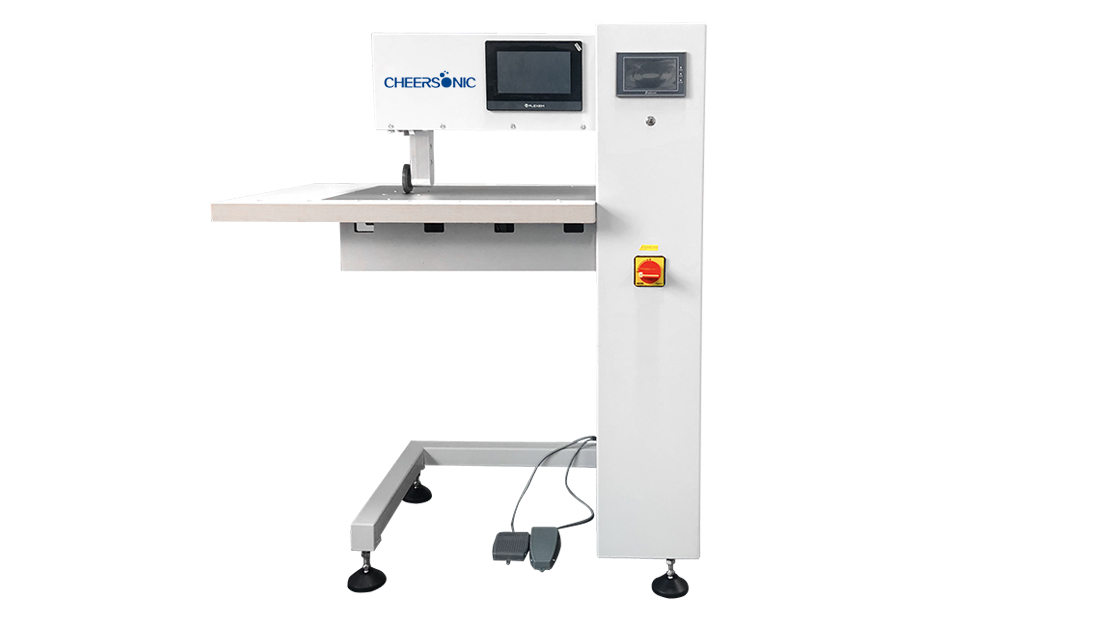
To address the challenges of sewing textured cotton-linen blends, SEWSONIC has developed a specialized “gentle-care” ultrasonic bonding process. Moving beyond traditional needle-and-thread methods, this technology utilizes high-frequency ultrasonic molecular fusion to achieve precise, seamless, and stitch-free bonding. Through high-frequency vibration, the fibers at the seam are instantly fused together—relying on the material’s own fiber structure rather than needles, threads, or adhesives. This effectively eliminates common industry defects such as needle holes, flattened textures, fraying, pilling, structural distortion, and edge unraveling after washing. The process preserves the fabric’s three-dimensional texture, breathability, structural integrity, and sophisticated matte finish.
Equipped with an intelligent, low-temperature constant-control system, the equipment employs gentle fusion parameters specifically calibrated for heat-sensitive natural cotton-linen fibers. The entire process operates at low temperatures, ensuring the fabric is not scorched, yellowed, singed, or embrittled. This protects the fullness and integrity of the fabric’s natural texture, preventing issues like localized sheen, color discoloration, fiber degradation, or flattened patterns—ultimately restoring the authentic, rustic, and premium quality of the original cotton-linen material. Featuring a flexible, adaptive compression structure designed specifically for textured fabrics, this technology applies gentle, uniform pressure. It intelligently conforms to the loose, three-dimensional textures of cotton-linen blends, ensuring smooth fabric feeding without stretching, unwanted imprinting, or structural distortion. Seams are rendered flat, seamless, soft, and supple—free from rigid ridges or protrusions—while preserving the fabric’s inherent texture and breathability. The fusion-welded seams are exceptionally robust, securely locking in loose fibers and fraying edges to completely eliminate unraveling, curling, or seam failure. The resulting garments remain durable through repeated washing and wear, maintaining their structural integrity and texture far better than traditional stitched seams.
In the mass production of textured casual apparel, SEWSONIC ultrasonic sewing equipment empowers manufacturers to enhance quality, reduce costs, and boost efficiency. By eliminating the need for frequent needle threading, bobbin changes, or tension and stitch-length adjustments, the system fundamentally prevents common issues such as skipped stitches, thread breakage, fabric strain, texture damage, and garment distortion. It streamlines production workflows and supports automated, continuous operation, leading to a significant increase in output. The process leaves no needle holes, loose threads, or damage to the fabric’s texture; the finished garments feature crisp, well-defined patterns, a clean matte finish, and a relaxed, fluid drape. This meets the high-quality standards required for “affordable luxury” cotton-linen apparel, while drastically reducing waste and loss of expensive, textured fabrics. The equipment is compatible with a wide range of cotton-linen blends—varying in weight, texture, and color—and handles processes such as edge sealing, joining, seamless bonding, and garment shaping. It is ideally suited for the standardized, large-scale production of artisanal-style womenswear, casual workwear, and premium loungewear.
The key to finishing textured cotton-linen blends lies in preserving their three-dimensional texture, preventing fiber fraying, maintaining breathability, and ensuring the stability of the garment’s silhouette. SEWSONIC ultrasonic sewing equipment specializes in addressing the challenges of stitching textured cotton-linen blend fabrics. It ensures seamless, pattern-preserving results without compromising the material’s inherent texture, while delivering smooth, durable, and washable seams. Designed for high-efficiency mass production, this technology helps garment manufacturers overcome the bottlenecks associated with processing textured cotton-linen fabrics. It effectively resolves common production pain points—such as high defect rates, significant material waste, and frequent rework—thereby enhancing the “artistic, understated luxury” aesthetic of finished garments and boosting their market competitiveness. This enables manufacturers to easily secure and fulfill high-quality orders for mid-to-high-end textured cotton-linen apparel.