
Ultrasonic Sewing Woven Blended Fabrics
Ultrasonic Sewing Woven Blended Fabrics – Sewsonic
Woven blended fabrics are high-end composite fabrics widely used in the apparel and home textile industries. They are made from two or more different fibers, woven using a warp and weft weaving process. This breaks the performance limitations of single-material fabrics, combining the advantages of cotton’s skin-friendly feel, synthetic fiber’s wear resistance, linen’s breathability, and silk’s drape, creating an all-around fabric with crispness, drape, breathability, and wear resistance. Through a precise woven structure, the fabric surface is tight and flat, with clear and regular patterns, strong shape support, and is not easily softened or deformed. Compared to knitted fabrics, it is more durable, tear-resistant, and has better shape retention. At the same time, the blend ratio is flexible and can be varied to achieve different properties such as softness and skin-friendliness, wrinkle resistance and ironing-free properties, breathability and dryness, and high color fastness, making it suitable for all-season apparel production. With its advantages of high plasticity, rich texture, cost-effectiveness, versatility, and durability, woven blended fabrics are widely used in high-end women’s wear, commuter fashion, corporate workwear, trench coats, home textiles, and bag accessories, making them a core fabric for mass production in major garment and home textile factories. However, due to their complex multi-fiber interwoven structure, diverse yarn ratios, and intricate fabric texture, traditional needle and thread sewing easily damages the interwoven texture, causing problems such as fraying and deformation—a common industry pain point in the finishing of woven blended fabrics.
Traditional sewing of woven blended fabrics easily leads to fabric damage, pattern defects, and a high scrap rate, making it difficult to meet the standards for high-end finished products. The core advantage of woven blended fabrics lies in their regular warp and weft interweaving texture, stable pattern structure, and uniform fabric feel. Traditional high-speed sewing needles leave dense, permanent needle holes in the fabric surface, directly damaging the interweaving structure, disrupting the warp and weft arrangement, resulting in a mottled fabric surface, texture breaks, and a complete loss of the refined and neat high-end feel of woven fabrics. This is especially true for fine-count, high-density blended fabrics and light-colored blended fabrics, where needle holes are particularly prominent and irreparable, directly causing the finished product to be downgraded and scrapped. Furthermore, the characteristics of multi-fiber blended yarns vary; some fibers are fine and fragile. The repeated pulling, friction, and compression of traditional sewing needles easily cause fabric pilling, localized whitening, yarn breakage, and defects such as fraying, rough edges, and misaligned textures, severely affecting the finished product’s refinement.
In addition, woven blended fabrics have uneven thickness and varying fiber tension, making it difficult for traditional sewing to handle the fabric feed unevenly and for the presser foot pressure to be properly matched. This easily leads to fabric stretching and misalignment, crooked stitching, arched seams, and accumulated wrinkles. Woven fabrics have strong shape retention; once the weave is distorted or the fabric surface is deformed, subsequent ironing cannot repair it, significantly increasing production losses and rework costs. Traditional needle and thread stitching results in dense stitches and thick, stiff threads, disrupting the overall smooth texture of the fabric. The hard, abrupt seams not only affect the smooth shape of the garment but also create a noticeable foreign object feeling when worn against the skin, significantly lowering the product’s quality and user experience. Furthermore, the complex and loose yarns at the edges of woven blended fabrics are prone to curling, fraying, splitting, and unraveling after washing and rubbing with traditional sewing, resulting in a consistently high rate of after-sales repairs. Traditional sewing processes are cumbersome, involving frequent machine adjustments, thread changes, and manual trimming. This is time-consuming, labor-intensive, and has low productivity, and it easily damages the fabric, making it unsuitable for the refined mass production demands of high-end woven blend fabrics.
Addressing the sewing challenges of woven blend fabrics, SEWSONIC ultrasonic sewing equipment offers a customized processing technology specifically for woven blend fabrics. It revolutionizes the traditional needle-and-thread method, employing high-frequency ultrasonic molecular fusion technology to achieve needle-free, thread-free, hole-free, and trace-free precision processing. The equipment uses high-frequency vibration to instantly fuse and solidify the fibers at the fabric seams through friction. Relying on the fabric’s own interwoven fiber structure, it fuses together, eliminating the need for needles, thread, and glue. This eliminates common industry problems such as needle holes, texture damage, fabric pilling, stretching deformation, and seam opening after washing, fully preserving the neat texture, crisp shape, and superior blend characteristics of woven blend fabrics.
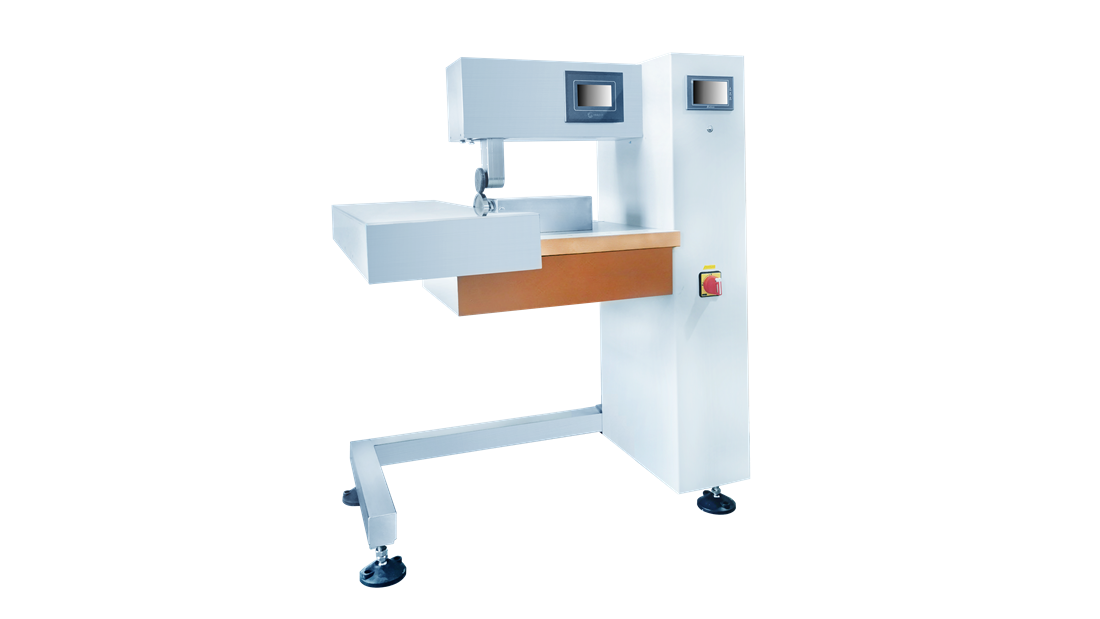
The equipment features an intelligent low-temperature constant temperature control system, adaptable to the heat-sensitive characteristics of various blended fibers. It ensures gentle and low-temperature melting throughout the entire process, preventing fabric from scorching, yellowing, burning, or becoming brittle. This effectively protects the integrity and regularity of complex interwoven textures, eliminating defects such as localized color differences, dullness, shine, and pilling, and maximizing the restoration of the original fabric’s smooth and high-quality texture. Combined with a flexible, self-adaptive pressing structure specifically for woven fabrics, the pressure is intelligently adjustable, uniform, and stable, adapting to blended fabrics of different thicknesses and ratios. The fabric feed is smooth without stretching, compressing the texture, or deforming. Seams are smooth and seamless, soft and supple, without any hard protrusions, perfectly preserving the fabric’s crisp drape and shape advantages, providing a comfortable and non-sticky experience. The fusion welds are tight and strong, with even stress, firmly locking the interwoven yarns in place. Even after multiple washes and repeated rubbing, the edges will not fray, the fibers will not loosen, and the deformation will not occur. The stability of the finished product far surpasses that of traditional needle and thread sewing.
In mass production scenarios, SEWSONIC ultrasonic sewing equipment helps processing plants improve efficiency, reduce costs, and increase productivity. The equipment eliminates the need for needle threading and frequent adjustments to stitch length and presser foot tension, preventing issues such as skipped stitches, broken threads, fabric tearing, texture deformation, and fraying at the source. This significantly simplifies production processes, supports automated operation of one person working on multiple machines, and dramatically increases production capacity. The entire process results in zero needle holes, zero thread ends, and zero texture damage, producing clean, smooth fabrics with regular textures and a clean, high-end design, significantly reducing waste in high-priced woven and blended fabrics. The equipment is compatible with various blends and weights of woven, blended, and interwoven fabrics, comprehensively covering processes such as overlocking, splicing, seamless pressing, and edge shaping, perfectly suited for standardized mass production of women’s wear, workwear, home textiles, and luxury apparel.
The core of high-end woven, blended, and interwoven fabric finishing lies in protecting the texture, maintaining smoothness, preventing snags, and stabilizing the shape. SEWSONIC ultrasonic sewing equipment specializes in solving sewing challenges of woven and blended fabrics. It provides seamless fabric protection, smooth and non-deformable finish, washability and durability, and high-efficiency mass production. It helps major garment and home textile processing plants break through process bottlenecks and solve the production pain points of high defects, high losses and high rework in traditional sewing. It effectively improves the quality of finished products and market competitiveness, and can easily undertake high-quality orders for mid-to-high-end woven and blended fabrics.
If you are interested, you can contact us directly via email at: market2@cheersonic.com