
Ultrasonic Sewing for‘’Dew-Textured’‘Washed Cotton-Linen Fabrics
Ultrasonic Sewing for‘’Dew-Textured’‘Washed Cotton-Linen Fabrics
“Dew-textured” washed cotton-linen—a blend of cotton and linen fibers—has emerged as a highly sought-after material for contemporary “Chinese-style” (Guofeng) apparel, vintage-inspired casual womenswear, and high-end home textiles. Crafted through precision weaving, enzymatic washing, and a specialized finishing process that imparts a “dew-drop” texture, this fabric stands apart from the monotonous, flat appearance of conventional cotton-linen blends. The unique, vintage-inspired wash creates a delicate, naturally irregular “dew-drop” pattern across the surface, offering a soft, matte finish. The texture is relaxed yet structured, successfully eliminating the stiff, coarse feel often associated with traditional cotton-linen materials. The cotton-linen blend combines the soft, skin-friendly comfort of cotton with the breathable, crisp qualities of linen; it excels at moisture-wicking, ensuring a cool, non-sticky feel even in summer. Furthermore, the fabric boasts excellent drape and enhanced wrinkle resistance; it is resistant to shrinkage or deformation after washing and actually becomes softer with every wash. With its soft, elegant color palette and sophisticated, vintage aesthetic, this fabric is ideal for minimalist, “Chinese-style,” and artistic fashion designs. It is widely used for items such as cotton-linen shirts, dresses, wide-leg trousers, *Hanfu* (traditional Chinese attire), bedding, and curtains—making it a preferred choice for mid-to-high-end garment manufacturers and home decor brands. However, the fabric’s unique “dew-drop” pattern, relaxed fiber structure, and delicate surface texture present a significant challenge for mass production: traditional needle-and-thread sewing often damages these distinctive, intricate textures.
When processed using traditional sewing machines, these “dew-textured” washed cotton-linen fabrics are highly susceptible to damage, compromising their core aesthetic and quality—frequently leading to high rejection rates for finished products. The primary selling point of this fabric lies in its unique, natural “raindrop” washed texture and vintage matte finish. Conventional high-speed machine sewing needles create dense, permanent puncture marks that disrupt the organic, irregular raindrop pattern, causing the texture to appear fragmented, mottled, and chaotic—effectively destroying the fabric’s signature vintage aesthetic. This is particularly problematic for light-colored or low-saturation raindrop-patterned cotton-linen blends, where needle marks are highly visible, creating stark contrasts in light and shadow that render the finished product substandard or even unusable, failing to meet the requirements for high-end goods. Furthermore, the washing process leaves the cotton-linen fibers loose and soft, significantly reducing their tensile strength. The pulling, friction, and compression from traditional sewing stitches easily cause the fabric to pill, snag, or experience yarn displacement, distorting and flattening the delicate, uniform raindrop texture.
Additionally, because this washed, raindrop-patterned cotton-linen is lightweight and highly pliable, uneven tension during the traditional fabric-feeding process often leads to stretching, misalignment, crooked seams, puckering, or the accumulation of folds—all of which severely compromise the garment’s silhouette and the integrity of its pattern. The loose fiber structure also results in poor stability at the seams, making edges prone to fraying, unraveling, or curling. Subsequent washing and tumbling processes frequently cause seams to burst, stitches to break, or threads to pull out, leading to an exceptionally high rate of product returns and repairs. Traditional sewing methods are also labor-intensive and leave behind numerous loose thread ends, which easily become trapped within the weave of the cotton-linen. Manually trimming these threads is time-consuming and costly; it also risks further damaging the fabric’s texture. Consequently, these traditional methods result in high material waste and low production efficiency, making them entirely unsuitable for the high-end, large-scale, and precision-oriented manufacturing required for this type of washed, raindrop-patterned cotton-linen fabric. To address the unique sewing challenges posed by “washed dew-textured” (rain-drop pattern) cotton-linen fabrics, SEWSONIC has developed a specialized ultrasonic sewing solution. This technology revolutionizes traditional needle-and-thread processing by utilizing high-frequency ultrasonic molecular fusion, enabling precise assembly without the need for needles, threads, perforations, or visible seams. Through high-frequency vibration, the cotton and linen fibers at the fabric joints are instantly fused together via frictional heat. This process relies on the fabric’s own fiber structure to create a bond—eliminating the need for needles, threads, or adhesives—and effectively preventing common industry issues such as needle-hole damage, loss of texture, surface pilling, fraying, curling, or seams coming undone after washing. It perfectly preserves the fabric’s delicate, vintage-inspired “dew-drop” texture, its breathable and crisp feel, and its soft, elegant drape.
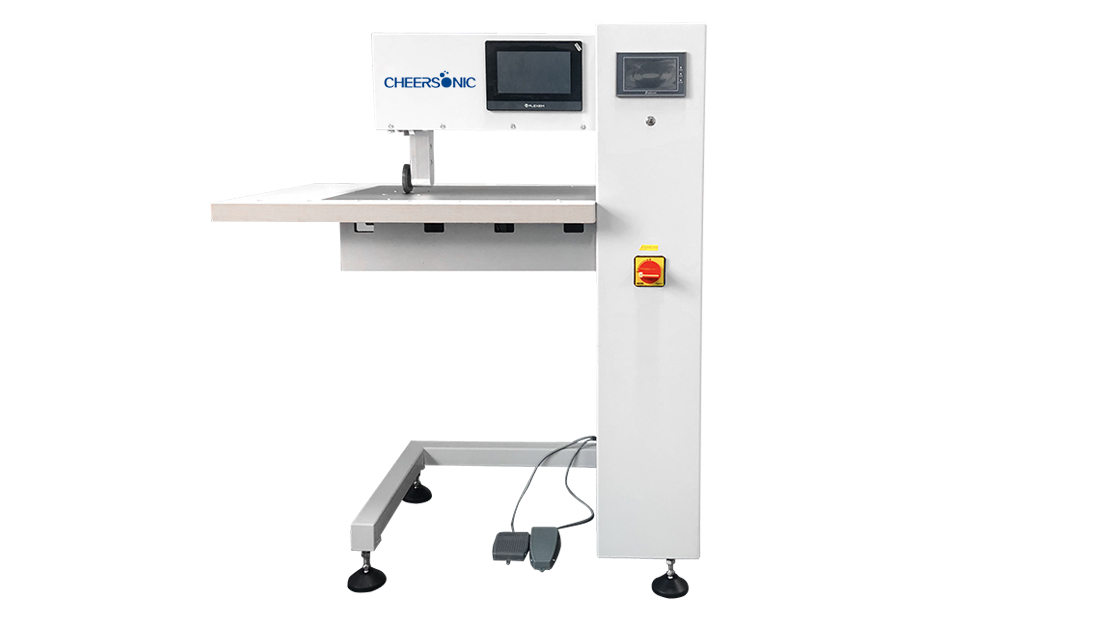
The equipment features an intelligent, low-temperature, constant-control system with fusion parameters specifically calibrated for the heat-sensitive fibers of washed cotton-linen. Operating at consistently low temperatures, the process ensures the fabric does not scorch, yellow, char, or sustain surface damage. This maintains the integrity and uniformity of the “dew-drop” pattern, while preventing localized sheen, color variation, or pilling—ultimately restoring the fabric’s original, high-end vintage aesthetic. A flexible, adaptive precision-pressing mechanism applies gentle, controlled pressure that complements the soft, lightweight nature of cotton-linen. The fabric is fed smoothly without stretching or flattening the delicate texture, resulting in seams that are flat, seamless, soft, and free from rigid ridges. This ensures the fabric’s breathability and drape remain uncompromised, providing a comfortable, premium feel when worn. The fused seams are robust and exhibit uniform tensile strength; they remain intact—resisting fraying, unraveling, or deformation—even after repeated washing and handling, offering a level of stability that far surpasses traditional needle-and-thread stitching.
In large-scale production environments, SEWSONIC’s ultrasonic sewing equipment empowers manufacturers to enhance quality, reduce costs, and boost operational efficiency. This equipment eliminates the need for manual needle threading, bobbin changes, or repetitive adjustments to stitch length and presser foot pressure. It fundamentally prevents common issues such as skipped stitches, thread breakage, fabric distortion, and pattern deformation. By significantly simplifying production workflows and enabling one operator to manage multiple automated machines, it delivers a substantial boost to production capacity. The process ensures a flawless finish—free from needle holes, loose thread ends, or damage to the fabric’s texture—resulting in a clean, smooth surface, perfectly preserved “raindrop” (textured) patterns, and precise garment shaping. This drastically reduces waste and loss when working with high-value, “raindrop-textured” washed cotton and linen fabrics. The equipment offers stable performance and broad versatility, accommodating various fabric weights and color palettes. It supports a full range of techniques—including edge finishing, seaming, seamless bonding, and delicate piping—making it an ideal solution for the standardized, large-scale production of traditional-style (Guofeng) apparel, artistic-style womenswear, and high-end home textiles.
The key to processing high-end “raindrop-textured” washed cotton and linen lies in preserving the fabric’s unique texture and tactile quality, maintaining its breathability, and ensuring structural integrity. SEWSONIC ultrasonic sewing equipment is specifically engineered to address the challenges of working with these fabrics. It enables seamless processing that protects the fabric’s texture, retains its vintage aesthetic, ensures durable, wash-resistant seams, and facilitates high-efficiency mass production. This empowers apparel and home textile manufacturers to overcome common processing bottlenecks, effectively eliminating the high defect rates, frequent rework, and material loss associated with traditional sewing methods. By enhancing the value and market competitiveness of the finished products, it allows manufacturers to confidently secure high-quality, mid-to-high-end cotton and linen orders.
If interested, please contact us directly via email at market2@cheersonic.com.